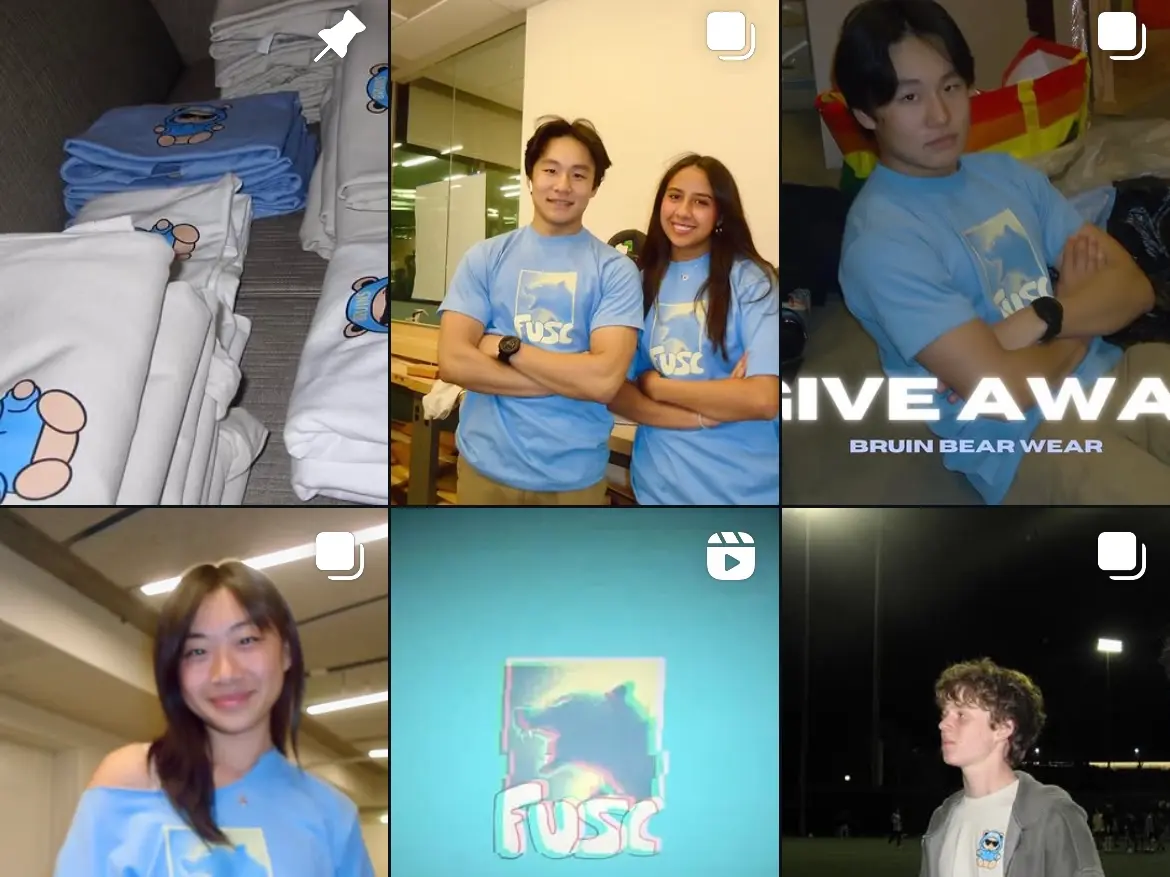
Within weeks of starting my first quarter at UCLA, I joined a group of friends to build a brand from the ground up. After running through a few ideas, the plan for an affordable UCLA-merch clothing business stuck. That became Bruin Bear Wear.
Where Do You Start?
It's the first question any new business faces. We had no idea where to begin, so we started by defining the fundamentals.
Our first week centered on loosely outlining the business; we defined our mission, a revenue model, expansion strategy, and how we'd split up the work. We recognized that much of this would change, so the real priority was developing MVPs and getting early feedback from students.
Business Fundamentals
One of our first milestones was securing a stable supply chain. In doing so, we wanted to deliver high-quality apparel that students would actually wear, but at the lowest possible cost. That balance would also make upselling easier later in the product's lifecycle.
As a result, we sourced bulk blanks from LA's fashion district and negotiated multi-term purchases — negotiations that were made easier because I could switch to Spanish with vendors. From there, our 'manufacturing' process was simple: heat-press vinyl designs onto blanks and push products directly into the marketing and sales cycle. Expensive extras, like custom packaging, were cut out of the equation to keep us agile.
That said, our real differentiator was design for price point. While the rest of the business resembled an MVP, our design process was extensive. If our initial brand appeal was affordability, our goal was to use desirable designs as a key value proposition. For our first launch, we iterated more than 25 times, gathering constant feedback from prospective customers. As they became finalized, the designs not only shaped the first launch but also future products in our catalog.
Learning to Sell
Most of the early advice we got pointed toward e-commerce. One of our early campaigns, therefore, was a guerrilla Instagram strategy designed solely on building buzz. For a few nights we saw traction, but interest wasn't sustained and didn't translate well into online pre-orders.
As a student brand selling to other UCLA students, we realized our online channels were best suited for awareness, not necessarily as inherent sales funnels. So we focused our efforts on in-person sales, like Bruin Walk — the busiest campus walkway and the notorious hotspot for promoters. Ahead of big sporting events, we wanted to target students in need of school merch. But on most of our first days, our efforts got lost in the noise.
That pushed us to get more creative, sometimes even bending the rules on where we could set up. We also learned, critically, how to effectively pitch to students in passing — those who were tired, rushing back from class, skeptical of another promoter, etc. Sales depended on reading their mindset and framing value quickly. And as we honed these skills, in-person sales became the crux of our success in the long-term, even if our early days were rough.
A Rainy Evening
Our real turning point came on a rainy night outside Pauley Pavilion. Sales had been slow, and in the downpour, we decided to try selling directly to fans and alumni headed into a game. Whether it was alumni's Bruin pride, the energy of our team selling all at once, or the strategies we used to upsell different types of customers, we sold like never before. After almost five hours, we had made thousands of dollars in profit and seemed to finally crack the formula.
From there, we rinsed and repeated. Sales grew, and with experience, we could build out other key parts of the business and delegate responsibilities more effectively. For instance, I helped lead customer relations when product issues arose, incentivizing customers to return and helping grow revenue from our errors.
Reflections
Bruin Bear Wear was intense and formative. I failed plenty, pivoted often, and learned constantly. For the sake of brevity, I haven't included the dozens of setbacks we faced, but each became an opportunity to adapt quickly.
In retrospect, I'm most grateful for the breadth of experience I gained — across supply chain, design, marketing, sales, customer relations, and more. Bruin Bear Wear showed me the realities of entrepreneurship. It also became the single biggest factor in shifting my path away from pre-law and toward building products and businesses.
In lieu of a master plan, we just started — and that turned out to be the most important decision we made.